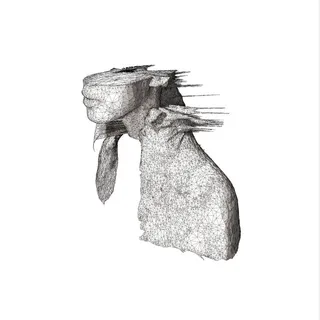
It opens like a goodbye. The kind of song you write about a person, the ache of someone walking out the door, the room they used to fill. Chris Martin sings it as loss, plain and direct, and for years that is how most people heard it: a breakup ballad, one of Coldplay’s quieter ones, tucked late on a big, exhausting record.
That reading is not wrong. It is just not the whole story. The feeling is real, and Martin sings it straight, but the sound carrying it has a debt the band never tried to hide. Once you know where it points, the song tilts. What you took for Coldplay at their most personal starts to sound like Coldplay looking up at someone.
The history of the track is shakier than its glossy surface lets on. By the time X&Y was finished, Coldplay had been wrestling the album for the better part of two years, scrapping songs, second-guessing themselves, a band that knew the world was waiting and felt every ounce of it. This song’s place on the record was not the sure thing it now looks like. What happened to it after that is the kind of detail you would never guess from how settled it sounds.
A goodbye ballad aimed at someone you would not guess, moving through footage that was never really the band's.
Then there is the video. Watch it and something is off. The band are there, but not the way a band is usually there in their own clip; not front and centre, not the point. The footage they are moving through does not quite belong to them, and it does not quite belong to now. It is one of those videos where the more you look, the less you can explain what you are actually seeing, and the explanation is stranger than any guess.
Years later, in 2025, Martin talked about the song with the distance of someone looking back at a hard stretch. He called it a great song, then admitted he was in a bad place when he made it. Which fits. This is a song that sounds like one thing and was built out of another. Three times over.
Pull the cards.
Pearls
0 of 3 surfaced
Surface any pearl, in any order, to hear what's really going on.
I
“A Coldplay heartbreak ballad that could only come from Coldplay.”
tap to surface
I
It's a tribute, by the band's own account. In Rolling Stone's 2005 cover story, Coldplay called it an ode to R.E.M., in the same spirit that "Talk" leaned on Kraftwerk: two X&Y songs were open nods to heroes. PopMatters heard it too, calling it "R.E.M. style pop." And in that Rolling Stone piece, Martin on Michael Stipe: "Our relationship is akin to a dog and its master. I'll always look up to him." The sound you took for pure Coldplay is a fan's homage.
tap to re-read
II
“Every song on X&Y was always meant to be there.”
tap to surface
II
This one wasn't. When Coldplay handed Parlophone an early X&Y tracklist, "The Hardest Part" was not on it; the band cut it, then added it back only when the album was finalized. The near-reject went on to become a single and Coldplay's first-ever entry on the US Adult Contemporary chart, peaking at No. 37. The song that almost didn't make the record opened a chart door nothing before it had.
tap to re-read
III
“The video shows Coldplay performing the song on stage.”
tap to surface
III
They were never there. The footage is real archival tape from the old US cable show "Attitudes," digitally composited so the band appears to back a live act. That act is an acrobatic dance duo: Barbara Moseley, 84, and her partner Gene Spencer, 25, and their routine was actually filmed in 1990, sixteen years before the song existed. The performance at the emotional center of the video is a real elderly dancer Coldplay edited themselves behind.