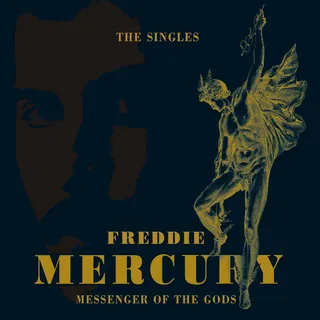
The last song on Freddie Mercury’s only solo studio album, the first record he made without Queen behind him. He recorded Mr. Bad Guy in Munich, in the rooms where he could finally chase the kind of music the band was never going to let him chase. This is where the album lands at the end of all of it, the closing track, and one he later said he loved.
He said he wrote it in five minutes. Almost too fast, the way the best things arrive when you stop trying to force them. Sit with that for a second. The song that sounds the most carefully built, the most cinematic on the whole record, is the one he claims he barely had to write at all.
And it does sound built. There is an orchestra here, or what your ear takes for one, strings swelling under him, lifting the whole thing into widescreen. Listen to where that swell is actually coming from. There were no Queen hands in this room, no four-way negotiation over every bar. This time Freddie decided how big it would get, and once you know what the swell is made of, the sound changes.
The last song on the one record he made alone, and the one he loved most.
Even the song points somewhere. This was not a love song written for nobody in particular. Someone who was close to him in those years ties it to a person in his life, from a world he was living in away from the band, and once you know who, the words stop sounding general. The person it points to is part of why the album exists at all.
For a song he loved this much, the world barely noticed it when it arrived. Of the singles Mr. Bad Guy sent out, this is the one that went nowhere, in and gone, while the album itself did fine. It sat there, the closer almost no one reached, for decades.
And then, a very long time later, the song got something it never had the first time around: a face. A whole new way to meet it, arriving so late that most of the people who would love it had not been born when he made it. The wait between the song and that moment is the kind of gap you do not see often.
Play it knowing all of this is in there. The speed he wrote it. The orchestra that is not an orchestra. The person behind it, from a life off to the side. A man stepping out of the biggest band in the world to find out what he sounded like on his own, and closing the record with one of his own favourites.
Pearls
0 of 3 surfaced
Surface any pearl, in any order, to hear what's really going on.
I
“Mercury wrote this ballad to no one in particular.”
tap to surface
I
Someone who was there says it had an address. Peter Freestone, Mercury's personal assistant, ties the song to his relationship with the Austrian actress Barbara Valentin, a close friend he lived with in Munich for a time. It was written while the two were together, and Mercury himself called it "a very personal thing." The most heart-on-sleeve track on Mr. Bad Guy points at one real woman.
tap to re-read
II
“That sweeping orchestra behind him cost a fortune to record.”
tap to surface
II
There is no orchestra. The album's only orchestral credit belongs to a different song. The sweep behind him is synthesizers and sampler programming, Fairlight and Kurzweil, from Mercury, keyboardist Fred Mandel and producer Mack's team, not a hired string section. No room full of session players, no Queen. The grandest-sounding moment on the song is a keyboard rig, faking a hundred-piece arrangement so convincingly you never thought to question it.
tap to re-read
III
“A Freddie Mercury single, of course, had a music video.”
tap to surface
III
Not for thirty-four years. Released in 1985, this song had no music video at all until September 2019, when it finally got an animated one, made only because the "Bohemian Rhapsody" film had sent people back to his solo work. A song from 1985 had to wait for a 2018 movie to be seen. Mercury, who died in 1991, never knew it existed.