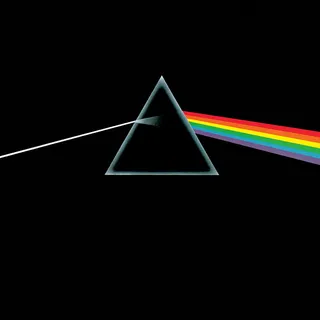
The first thing you hear is a till. A drawer slamming, coins dropping, paper tearing, all of it locked into a groove before a single note arrives. It sounds like a field recording from a shop on a Tuesday afternoon. Listen to how cleanly it repeats, though. Real life is never that tidy.
Then the riff lands, and it walks with a swagger that no Pink Floyd song had walked with before. Cynical, bluesy, sung with a curled lip. The words are an inventory of greed: things a person buys when the money finally arrives, the football team, the private jet, the casual cruelty of telling everyone else to keep their hands off your pile. Roger Waters wrote it as a takedown. A sneer at the very thing the song catalogues so lovingly.
The groove itself is part of the joke, and it does not sit where your foot expects it to. Try to tap along and you will lose your place. Something underneath is counting differently. Then the solo arrives, the band stretches out, and for a stretch the floor seems to settle, before the strangeness folds back in. Most people have heard this song a thousand times and never noticed they were being tripped.
An anti-greed anthem that made them rich. The joke was always on the writer.
And here is the part that should make you uneasy. A band that spent its first years making long, drifting, uncommercial records suddenly had a song that radio could actually play. One that crossed an ocean and changed everything about where they stood. The anti-greed song became the cash machine.
Waters knew it, too. He has been candid, years later, about what that windfall did to the principles behind the song. What money did to the man who wrote Money is the part to hear in his own words.
There is more buried in here. Voices in the long fade-out, drifting in from the studio, one of them from another band recording in the building, saying things you only half catch. Who got left on the cutting-room floor is its own small story. And a question worth sitting with: whose song is this, really? The name on the writing credit is not the whole story of who made the record.
It is the catchiest thing they ever made and one of the most quietly contemptuous. Press play and count the beats. See how far you get.
Pearls
0 of 6 surfaced
Surface any pearl, in any order, to hear what's really going on.
I
“The song opens with a cash register ringing in time.”
tap to surface
I
There is no till. Roger Waters recorded each money sound on its own, coins, a tearing receipt, a counting machine, some of them out in his garden shed, then physically cut and spliced the tape into a loop. He built it to land in exactly seven beats, so the thing you hear as background noise is also the count-in. The groove you have hummed for more than fifty years was assembled by hand with a razor blade.
tap to re-read
II
“Money has a groove you can tap your foot to easily.”
tap to surface
II
Try it. The verse is in 7/4, seven beats to the bar, not the four that almost every rock and pop song lives in. That missing eighth beat is why the riff always feels like it lurches, like a step that arrives a fraction early. Most people have tapped along to Money their whole lives and never noticed they were counting to seven. Now you will not be able to count to anything else.
tap to re-read
III
“Dark Side of the Moon was a monster hit single after single.”
tap to surface
III
It had no singles. Or near enough. Of the entire album, only Money ever charted on the Billboard Hot 100, and it was Pink Floyd's first American hit, reaching No. 13. The record that lived on the charts for years sold itself as an album you played whole, side to side. The band that came to define the LP era broke America on the back of one song about greed.
tap to re-read
IV
“Waters wrote Money as a takedown of greed.”
tap to surface
IV
He did, and then it got him. Years later Waters admitted that the song's success forced a reckoning: he had to decide whether he was really a socialist, and, in his words, he "became a capitalist." He confessed to coveting a Bentley "like crazy." The man who wrote rock's most famous sneer at money watched the royalties from it quietly change his mind. The satire worked on everyone except its author.
tap to re-read
V
“Money is Roger Waters' song through and through.”
tap to surface
V
On paper, yes: Money is one of only three songs on the album credited to Waters alone, no co-writer. On the record it is David Gilmour's. He sang the lead and played all three guitar solos, and at the mix he doubled Waters' bass riff on guitar so it would cut through. As Gilmour told it, Waters brought the words and verses nearly finished, and the band "made up middle sections, guitar solos and all that stuff." The parts you remember earned no writing credit.
tap to re-read
VI
“The murmured voices at the end of Money are scripted dialogue.”
tap to surface
VI
They are real answers. Late in the sessions, people around the studio answered questions on cards, and their answers were edited into the album. The voices that made it include roadies Roger "The Hat" Manifold and Chris Adamson, Puddie Watts, wife of road manager Peter Watts, and Abbey Road doorman Gerry O'Driscoll. One of the best-known lines in the fade is credited, in Guesdon and Margotin's account, to Wings guitarist Henry McCullough. Paul and Linda McCartney answered too; their answers were not used. The doorman made the record; the Beatle didn't.